All services

01 / PoC & Feasibility Studies

PoC & feasibility
studies.

Generating in-vivo evidence on implant function, immune response and early device comparisons, in time to inform design decisions before design freeze.

Focused prototype studies and expanded feasibility evaluations.

The study scope

Evidence within your
development programme.

Defining the investigation around the prototype, the next design decision and the milestone the findings need to inform.

Proof of concept

Small, focused prototype studies with limited timepoints and targeted early comparisons. Investigating the initial function and tissue-response questions that determine the next design iteration.

A focused answer to the prototype question.

Feasibility

Expanded evaluations with larger study groups, additional timepoints and more extensive device comparisons. Examining how the selected design performs beyond the initial prototype question.

A broader basis for the next development step.

Study groups, timepoints, comparisons and delivery milestones are scoped together. The study question determines the design.

What the evidence reveals

What changes your
next design decision?

Connecting the implant, its surrounding tissue and the comparison needed to evaluate the prototype.

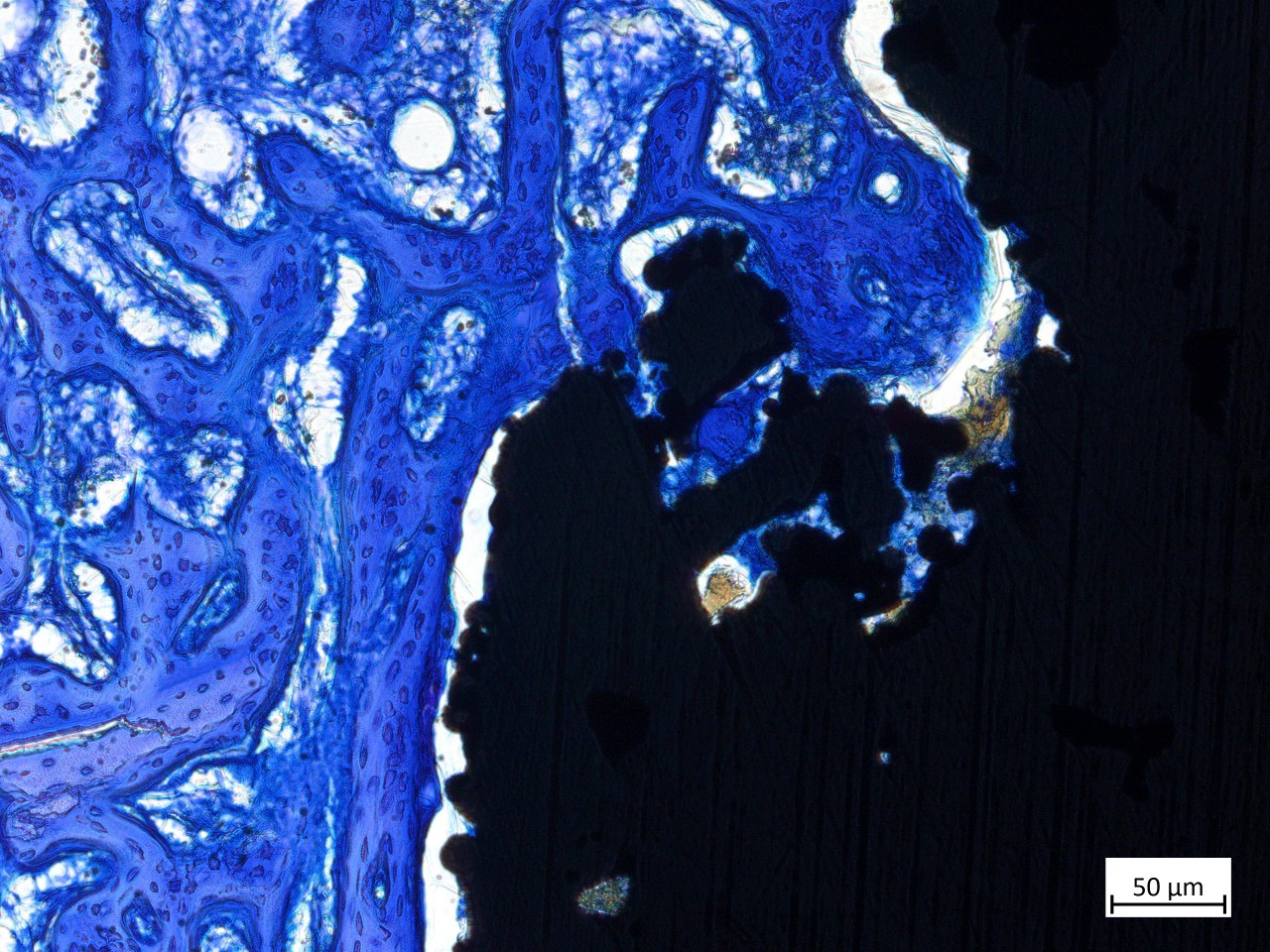
Original toluidine-blue section of an undecalcified bone and titanium interface, with a 50-micrometre scale bar.
Undecalcified bone + titanium · Toluidine blueRepresentative image from the BerlinAnalytix scientific archive. Original scale bar and image colours preserved; no prototype-study result is implied. View original image.

Implant function in tissue

Assessing study-relevant tissue features at and around the implant, alongside functional endpoints included in the study.

Product relevance · Informing whether the design is producing the intended tissue interaction.

Local immune and tissue response

Examining inflammatory infiltrates, tissue organisation, fibrosis and encapsulation where relevant to the implant.

Product relevance · Identifying responses that warrant design changes or closer investigation.

Early device comparisons

Comparing the prototype with a predicate or reference device against agreed endpoints.

Product relevance · Placing early findings in the context of an existing device or material.

Interpretation follows the study model, endpoints and comparisons. Histology contributes tissue evidence to the overall assessment of implant function.

See the published bone-substitute comparison

Optional technical detail

How the evidence
is produced.

Preserving the structures that answer the development question, then selecting staining and analysis around those endpoints.

Explore processing & analysis
Bone and implant interfaces

Undecalcified processing (P1) preserves mineralised bone architecture and the interface with titanium or ceramic implants. Preserving cortical and mineralised structures makes them available for histopathological and quantitative assessment.

Soft-tissue implants

Paraffin processing supports assessment of soft-tissue regeneration, fibrosis and encapsulation. Preparation is selected for the specimen and endpoint; interfaces or mineralised structures requiring preservation call for an appropriate alternative.

Study-specific staining and analysis

Selecting stains and, where relevant, immunohistochemistry for the tissue structures and cellular features under investigation. Histopathology and histomorphometry provide the qualitative and quantitative readouts agreed for the study.

Your next investigation

What must your
prototype demonstrate?

Bring the device question and the development milestone. The study scope connects the evidence required with the decision ahead.

Discuss a development study

A useful starting point

  • Device or biomaterial and intended tissue interaction
  • Prototype question and relevant comparator
  • Design milestone and the evidence needed before it