All services

02 / Research Studies

Research
studies.

Building a stronger body of preclinical evidence through larger-scale studies of implant behaviour across multiple timepoints and against predicate or reference devices.

Supporting scientific validation, FDA submissions and EU MDR technical documentation.

The study scope

Building the
comparative evidence.

Extending beyond feasibility with a broader investigation of implant behaviour, material change and the tissue response over time.

Expanded study scope

Defining study groups, observation periods and timepoints around the scientific question. Bringing tissue response, integration and material behaviour into the same study framework.

A stronger body of evidence across the chosen conditions.

Predicate and reference comparisons

Evaluating the investigational device against appropriate comparison groups using predefined endpoints and consistent evaluation methods.

Interpretable comparisons tied to the product question.

Study design, endpoints, controls and evaluation methods determine the contribution of the evidence. Scale alone does not establish its strength or suitability.

What the evidence reveals

How does the implant
behave over time?

Characterising the relationship between material persistence, tissue formation and integration across the planned observations.

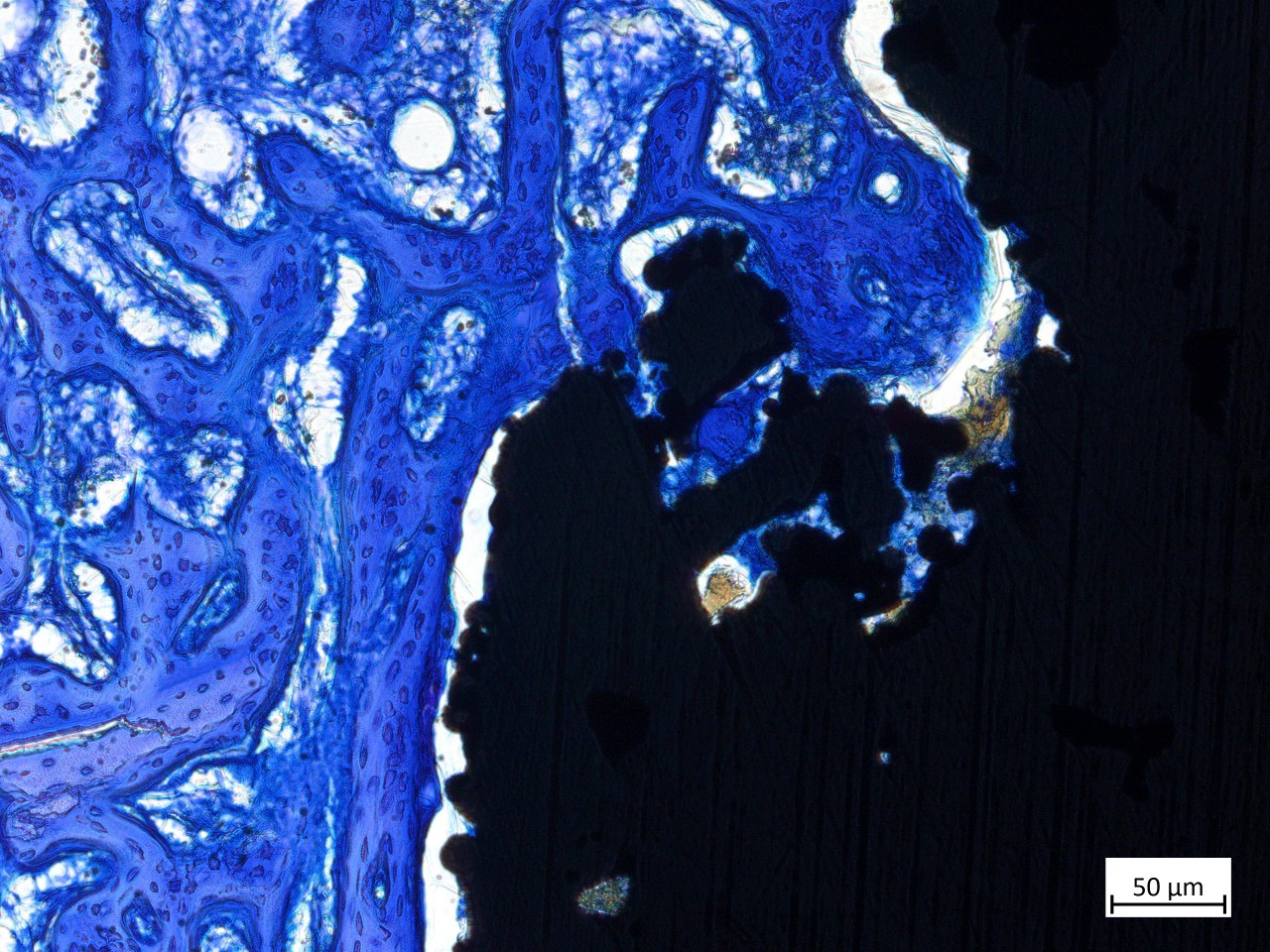
Original toluidine-blue histology of an undecalcified bone and titanium interface, including the original 50-micrometre scale bar.
Bone–implant interface · Toluidine blueRepresentative image from the BerlinAnalytix scientific archive. This single field is not a timepoint comparison or a reported research-study result. View original image.

Regeneration and integration

Assessing the tissue formed, its organisation and its relationship to the implant across study timepoints.

Product relevance · Evaluating how the device supports the intended tissue response.

Degradation and tissue replacement

Characterising remaining material and the tissue occupying the investigated region, where those endpoints apply.

Product relevance · Examining how material persistence and tissue formation develop together.

Comparative implant behaviour

Evaluating the same relevant endpoints across the device and predicate or reference groups.

Product relevance · Establishing the similarities and differences that matter to scientific evaluation.

The contribution to scientific or regulatory evaluation depends on the commissioned protocol, model, endpoints and study conduct.

See the published bone-substitute comparison

Optional technical detail

How the evidence
is produced.

Applying consistent preparation and evaluation across study groups while retaining the structures needed for each endpoint.

Explore processing & analysis
Preserving the investigated structures

Undecalcified processing (P1) supports investigation of mineralised bone, cortical architecture and implant interfaces. Paraffin processing supports appropriate soft-tissue endpoints. The preparation route follows the tissue, material and evidence required.

Matching stains to the endpoint

Selecting stains to distinguish the tissue and material features under investigation. Across timepoints, a consistent staining and evaluation approach supports meaningful comparison of tissue organisation, matrix and selected cellular features.

Histopathology and quantitative analysis

Combining scientific interpretation with study-defined quantitative readouts, such as tissue areas, material presence or bone–implant contact where appropriate. Sampling, regions of interest and evaluation criteria are defined within the study.

Your next investigation

What evidence will
strengthen the picture?

Connect the scientific question with the comparisons, timepoints and endpoints that make the study informative.

Discuss a research study

A useful starting point

  • Device question and findings from earlier work
  • Predicate or reference device and intended comparisons
  • Scientific objectives and intended use of the evidence