All services

03 / Material Studies

Material
studies.

Characterising residual cellular and material components in biomaterials and evaluating the effects of processing changes.

Bone substitute materials, collagen patches and processing comparisons.

The study scope

Characterising the
material you produce.

Investigating relevant residual components and structural characteristics, with comparisons between preparations or processing conditions.

Material characterisation

Examining relevant cellular and material features in the submitted biomaterial. Selecting preparation and evaluation methods around the components the investigation needs to detect.

Evidence about the material within the defined analytical scope.

Processing comparisons

Comparing material prepared under different processing conditions using agreed features and evaluation criteria.

Characterising what changes when the process changes.

A material investigation can stand alone or contribute to a development, research or regulatory programme. Its scope follows the specific material question.

What the evidence reveals

What remains?
What has changed?

Bringing the components and architecture of a biomaterial into a form that can be examined and compared.

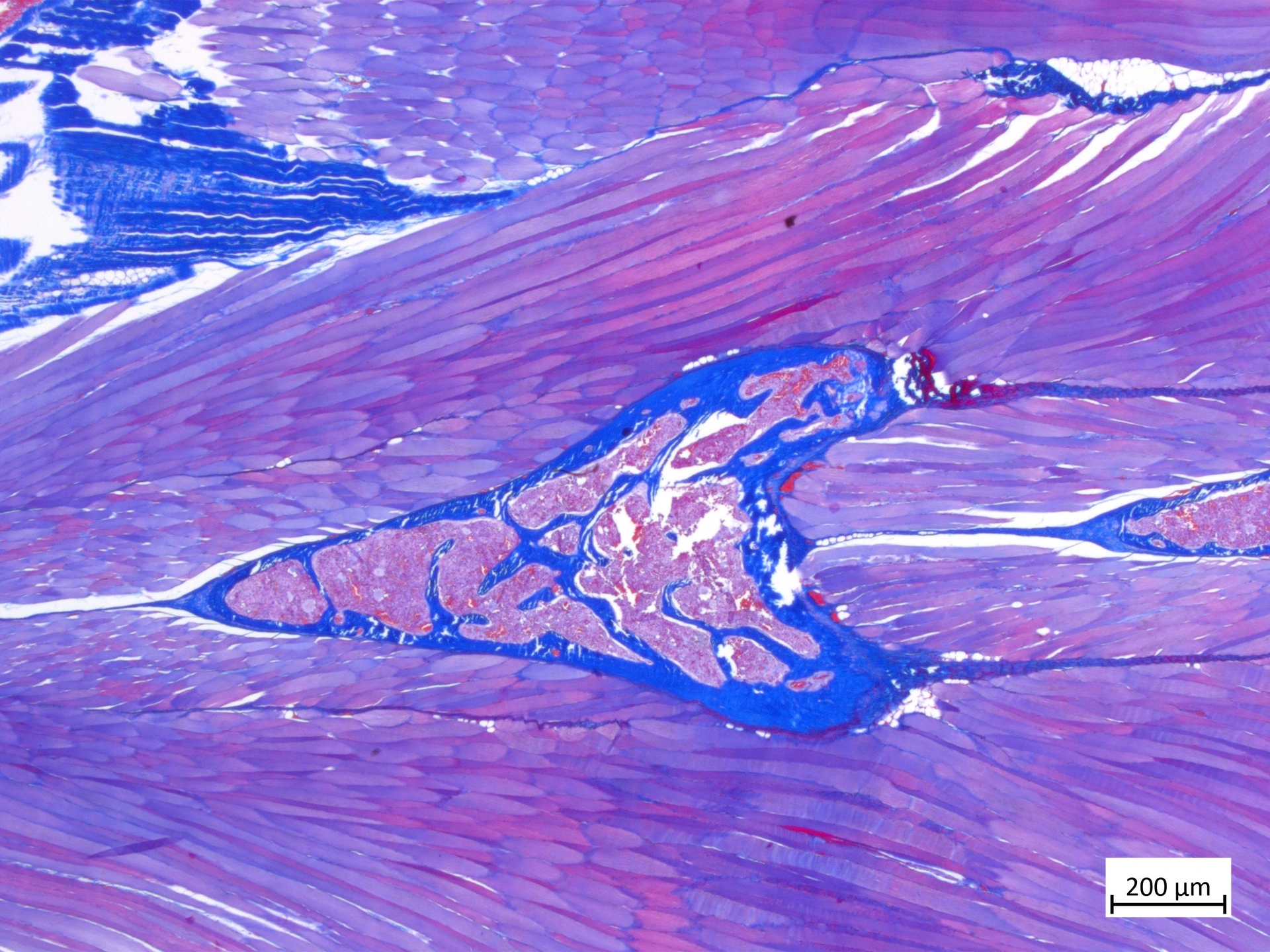
Original Azan-stained tissue section showing blue connective matrix and red-stained structures.
Tissue architecture · AzanRepresentative staining image from the BerlinAnalytix scientific archive. This is not a residual-component result for a bone substitute or collagen patch. View original image.

Residual cellular components

Investigating relevant cellular remnants with preparation, staining and evaluation selected for the material.

Product relevance · Contributing evidence for material evaluation within the sensitivity and scope of the chosen methods.

Material structure and distribution

Examining visible material features and their organisation in the investigated sections.

Product relevance · Characterising structural features relevant to the material specification or processing question.

Effects of processing changes

Comparing defined features across the preparations or processing conditions included in the investigation.

Product relevance · Supporting evaluation of whether and how a processing change affects the material.

Any conclusion about residual components is limited to the sampled material and the capabilities of the selected methods.

Optional technical detail

How the evidence
is produced.

Matching preparation, staining and analysis to the biomaterial and the components under investigation.

Explore processing & analysis
Preparation matched to the material

Selecting a route that retains the material features needed for assessment. Undecalcified preparation is relevant where mineralised structure must remain intact; other materials require preparation matched to their composition and study endpoint.

Targeted staining

Selecting stains for the structures or residual components specified in the investigation. A staining panel follows the material question and the features that need to be distinguished.

Comparative evaluation

Defining the features, sampling and evaluation approach before comparing preparations. Qualitative assessment and, where appropriate, quantitative readouts document the differences investigated.

Your next investigation

What does your
material need to show?

Start with the biomaterial, the component of interest or the processing change to be evaluated.

Discuss your material

A useful starting point

  • Material composition and intended application
  • Residual component or structural feature of interest
  • Preparations or processing conditions to compare